Human Task Atlas
Understand the task.
A structured map of the things people need to do — and the cognitive demands involved.
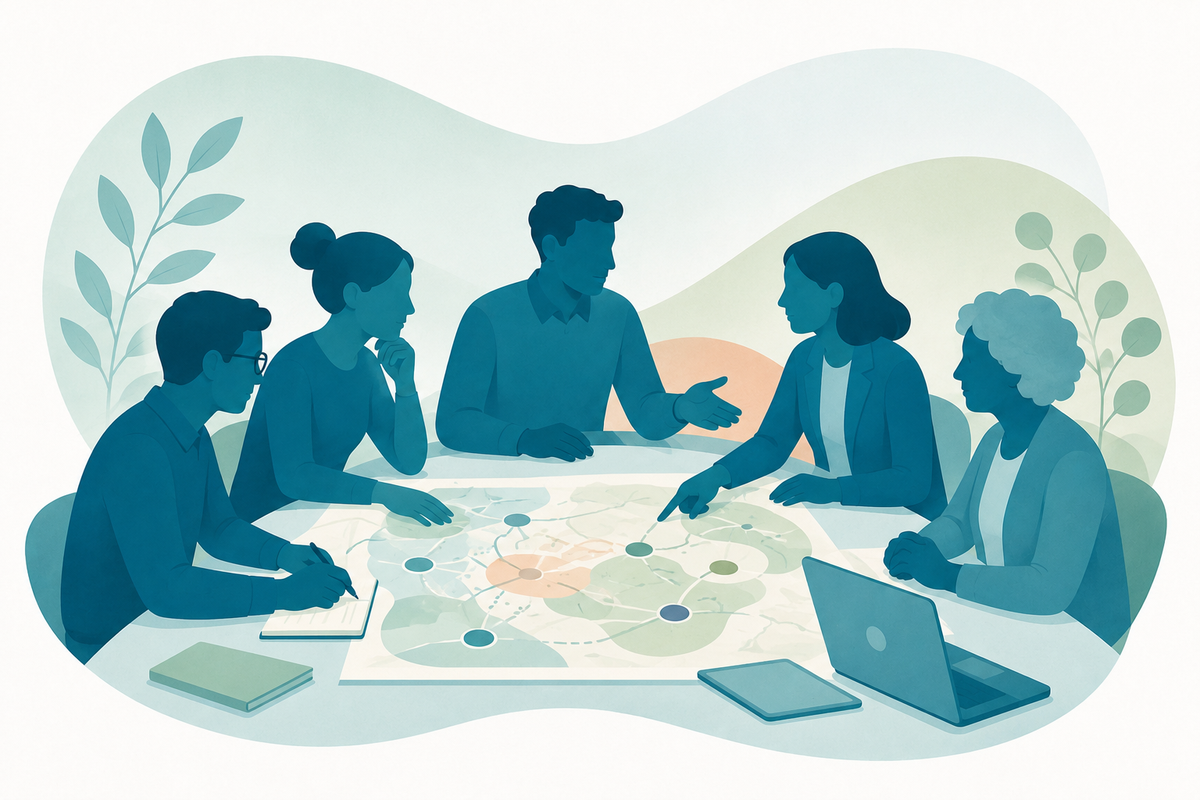
The Human Task Atlas is a proposed open map of the tasks people perform in real life and the cognitive demands those tasks create.
If we want to understand who is well matched to a task, we first need to understand what the task actually demands.
It asks: what cognitive capabilities does this task actually require, in what combination and at what level?
That question matters because intelligence is often interpreted without enough attention to the task.
Why Task Mapping Matters
A task name hides cognitive complexity.
“Take medication,” “complete a form,” “learn a procedure,” “make a decision,” or “use an AI assistant” may sound simple. Each may require reading comprehension, sequencing, memory, attention, uncertainty management, error checking, communication, or judgement.
If we do not describe the task, we cannot interpret performance responsibly.
How It Differs From Existing Systems
O*NET describes occupations, skills, abilities, work activities, and work context. ESCO describes European skills, competences, qualifications, and occupations. These systems are useful neighbors.
The Human Task Atlas would focus specifically on the cognitive-functional structure of tasks across domains, not only formal jobs.
It could include health tasks, school tasks, care tasks, public-service tasks, AI-assisted tasks, and everyday life tasks.
Example
Consider the task of understanding a medication instruction.
The domain is health and daily living. The cognitive demands may include reading comprehension, memory, sequencing, risk interpretation, and routine formation. The environment may include a clinic, pharmacy, home, or digital portal. Supports might include plain language, reminders, pharmacist explanation, translated materials, or AI-assisted summarization.
The key caution is simple: do not infer low intelligence from failure caused by unclear instructions or inaccessible systems.
Part of a shared research infrastructure
The four projects connect.
The Human Task Atlas describes tasks. The Environmental Registry describes conditions. The Intelligence Observatory follows cognitive profiles and functioning over time. The Performance Lab studies what happens when those elements interact.