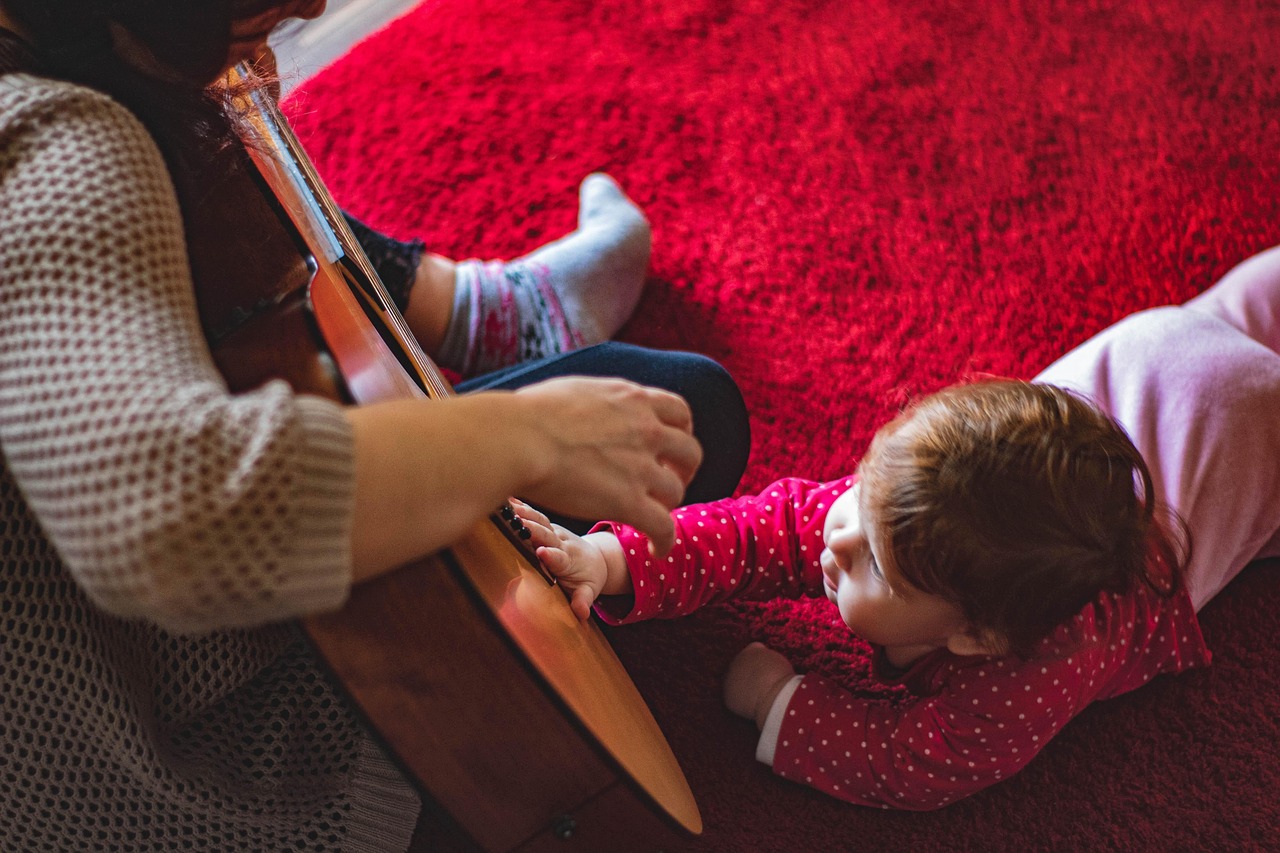
Developmental theories ask a question that static ability models cannot answer by themselves: how does a child’s way of thinking become an adult form of cognition? A four-year-old and a fourteen-year-old do not merely differ in how many difficult questions they can answer. They differ in knowledge, attention, memory, strategies, language, self-monitoring and the kinds of relationships they can coordinate. Development changes the system doing the thinking. That creates a different problem from the one psychometric theories usually begin with. Psychometrics asks how people differ and how those differences are structured. Developmental theories of intelligence ask how cognitive organization changes with age and experience—and what mechanisms produce those changes.
There is no single developmental theory of intelligence. Piaget supplied the most famous stage theory, but later approaches revised, narrowed or replaced major parts of his account.
Piaget changed the question
Jean Piaget was interested less in ranking children than in the structure of their reasoning. A child’s wrong answer could be scientifically valuable if it revealed a coherent way of understanding the world. His theory proposed qualitative reorganizations in thought: sensorimotor intelligence in infancy, followed by preoperational, concrete-operational and formal-operational forms of reasoning. Development, on this view, was not simply adding more facts to the same mental machinery. That idea was enormously influential. The strong version of universal, synchronized stages has faced substantial empirical criticism. Children’s competence often appears earlier or later depending on task demands, knowledge and how a problem is presented. Development across domains is less uniform than a simple staircase suggests. But the developmental question Piaget made unavoidable survived those criticisms.
Neo-Piagetian theories put processing limits inside development
Later theorists tried to retain the idea of increasing cognitive complexity while connecting it to mechanisms familiar from cognitive psychology. Neo-Piagetian accounts associated with researchers such as Juan Pascual-Leone, Robbie Case and Andreas Demetriou proposed roles for attentional or working-memory capacity, processing efficiency, strategies, domain-specific systems and metacognitive awareness. Imagine a child who can understand each of three relations separately but cannot yet coordinate all three at once. A capacity-based account can explain the failure without assuming the child lacks every component concept. The problem may be the number or complexity of representations that can be actively coordinated.
As capacity, strategy and knowledge develop, tasks that previously overloaded the system become manageable.
Development and individual differences are not the same axis
A common mistake is to imagine a single ladder on which children simply climb at different speeds. Developmental change and individual differences interact, but they are not identical. At age 8, two children can differ in reasoning ability while both also differ dramatically from their own future 18-year-old selves. A theory has to explain both age-related transformation and differences among people at the same age. Modern attempts to integrate developmental and psychometric traditions examine processes such as working memory, processing speed, inhibition and relational integration because these may contribute to both kinds of difference.
Knowledge changes what capacity can accomplish
Suppose two children have the same nominal working-memory capacity but one has extensive knowledge of chess. A chess position can be compressed into meaningful configurations for the expert, reducing effective processing demands. Development is therefore not simply a biological expansion of mental storage. Knowledge changes representation; strategies change task demands; language creates new tools for thought. This is one reason contemporary developmental science is wary of explanations based on a single maturation variable.
Does intelligence develop continuously or in stages?
Both descriptions can capture parts of development, depending on the level of analysis. Some abilities show gradual quantitative improvement. Some transitions can look stage-like when several component changes reorganize what a child can represent. Whether broad, universal Piagetian stages exist in the strong classical sense remains contested. Stages can still be useful descriptive heuristics without being literal switches that every child flips at the same age across every domain.
Where does schooling fit?
Schooling is not merely a place where an already-developed intelligence gets measured. Instruction builds knowledge, strategies and symbolic tools, and additional education has causal effects on cognitive-test performance. Cultural practices shape which skills are practiced and how problems are represented. Vygotskian traditions emphasized this social and cultural mediation more strongly than Piaget did, particularly the role of language, instruction and guided participation.
The developmental problem that remains
A complete theory of intelligence cannot only draw a map of adult differences. It must eventually explain how that map comes into being. Developmental theories contribute mechanisms and timescales: maturation, working-memory and attentional changes, knowledge acquisition, strategy discovery, metacognition, schooling and social interaction. No single framework has integrated all of them conclusively. What survives is the central insight: intelligence is not merely something measured at a moment. It is a pattern of cognitive capacities with a developmental history—and understanding that history may be necessary to explain why adult abilities have the structure they do.
References
- Piaget, J. (1952). The Origins of Intelligence in Children. International Universities Press. Source
- Lourenço, O. M. (2016). Developmental stages, Piagetian stages in particular: A critical review. New Ideas in Psychology, 40, 123–137. DOI
- Case, R. (1985). Intellectual Development: Birth to Adulthood. Academic Press. Source
- Demetriou, A., et al. (2018). Mapping the dimensions of general intelligence: An integrated differential-developmental theory. Human Development, 61, 4–42. DOI
- Lemaire, P., & Bherer, L. (2019). Intelligence and cognitive development: Three sides of the same coin. Journal of Intelligence, 7, 14. DOI