
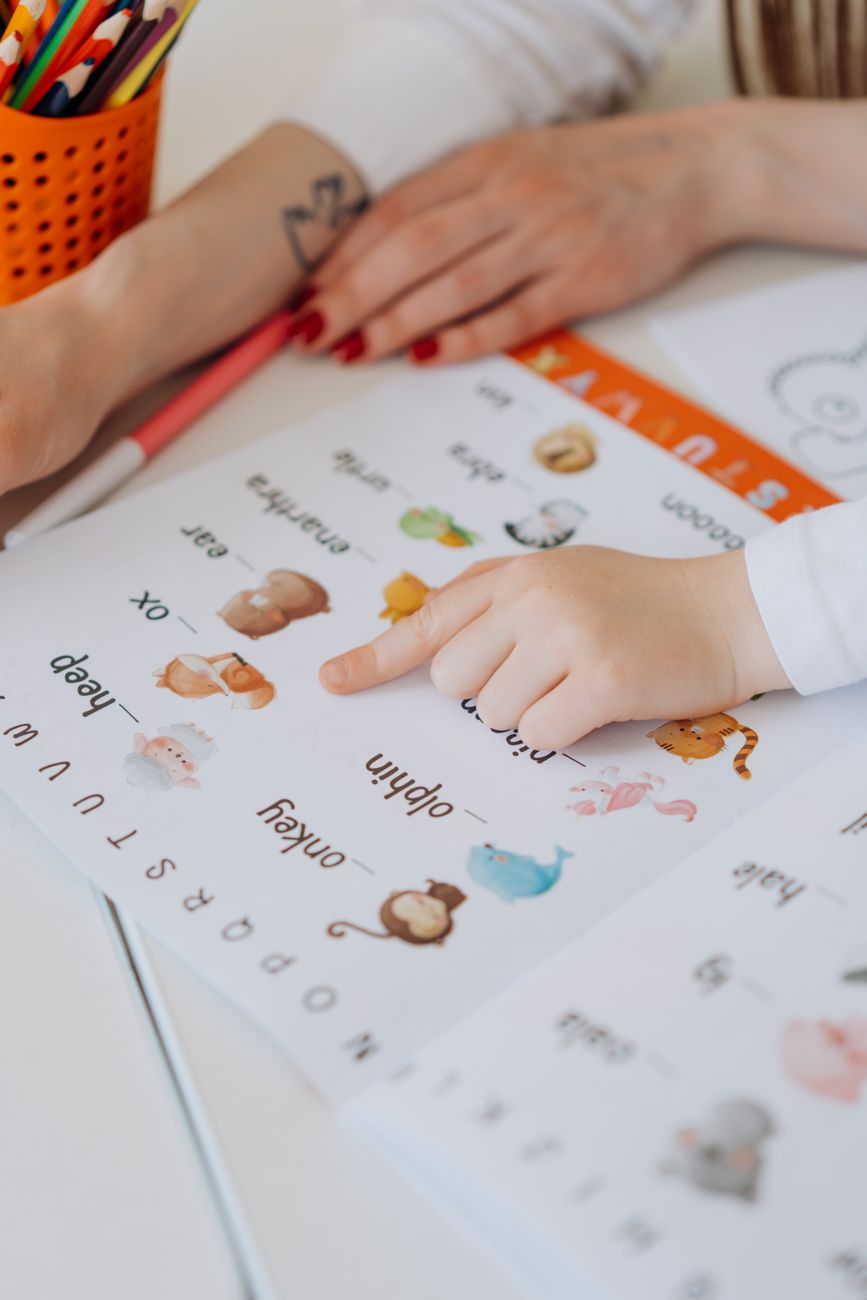
Name as many animals as you can in one minute. At first, examples may arrive easily: dog, cat, horse, elephant. Then retrieval slows. You may switch to a category—birds, sea animals, farm animals—to generate more. This kind of performance illustrates retrieval fluency: the rate and fluency with which information or ideas stored in long-term memory can be strategically produced. In contemporary CHC terminology, retrieval fluency is commonly labeled Gr. It has been separated in recent formulations from learning efficiency, reflecting the distinction between getting information into a durable form and producing stored information efficiently when it is needed.
Knowing something and retrieving it are different achievements
You have probably experienced knowing a person’s name but being unable to produce it until minutes later. The knowledge was not necessarily absent. Retrieval failed under the conditions of the moment. This distinction is central to memory science. A person’s store of semantic knowledge can be extensive while access to particular information is temporarily slow. Conversely, someone can rapidly produce many familiar examples in a category without possessing unusually deep knowledge of that domain. Retrieval fluency therefore should not be equated with crystallized knowledge.
Fluency depends on search
Imagine trying to list words beginning with a particular letter. You do not inspect a literal alphabetical filing cabinet. Retrieval is guided by cues and by the organization of knowledge. People often produce responses in clusters. In a category task, someone may name several pets, then several African animals, then birds. Switching between clusters can generate new candidates when one local search is exhausted. This means fluency reflects both accessibility and search strategy. It can also depend on executive control: repeated responses must be monitored, task rules maintained and irrelevant candidates rejected. The observed number of responses is consequently not a pure measure of memory speed.
Retrieval fluency is not processing speed
Both constructs can involve speed, which makes confusion easy. Processing-speed tasks typically emphasize rapid, accurate performance of relatively simple operations. Retrieval-fluency tasks require the person to generate information from long-term memory under a constraint. Someone might scan symbols extremely quickly but take longer to retrieve names. Another might produce ideas or words fluently without being exceptional on visual processing-speed tasks. Psychometric evidence supports treating retrieval fluency as distinguishable from processing speed, even though speeded demands can contribute to both.
How retrieval fluency is measured
Common paradigms ask participants to generate as many examples as possible from a semantic category, produce words satisfying a phonological rule, or rapidly retrieve ideas under other constraints. Different fluency tasks are not equivalent. Semantic fluency draws strongly on conceptual knowledge. Letter fluency places different demands on strategic search and language. Idea-production tasks may overlap with aspects of divergent thinking. Age, language, education and familiarity with the category matter. A bilingual person’s performance can differ across languages because lexical accessibility and usage history differ, not because long-term memory as a whole has changed. As always, the task defines what can legitimately be inferred.
Retrieval fluency and intelligent performance
Efficient retrieval can make cognition look effortless. When relevant concepts, facts or strategies become available quickly, working memory does not have to spend as long searching for them. That can support reasoning and communication. But fluent retrieval is not the same as good reasoning. Producing many ideas quickly does not guarantee that they are useful; retrieving a familiar answer rapidly can even interfere when a problem requires a novel approach. Retrieval fluency is best understood as an access property of learned information. It concerns how readily stored material can be brought back into active use—not how much intelligence a person has, and not simply how much they know.
References
- Carroll, J. B. (1993). Human Cognitive Abilities. Cambridge University Press. DOI
- Schneider, W. J., & McGrew, K. S. (2018). The Cattell–Horn–Carroll theory of cognitive abilities. Source
- McGrew, K. S. (2009). CHC theory and the human cognitive abilities project. DOI
- Unsworth, N. (2017). Examining variation in working memory capacity and retrieval from long-term memory. Memory & Cognition, 45, 543–558. DOI
- Troyer, A. K., Moscovitch, M., & Winocur, G. (1997). Clustering and switching as two components of verbal fluency. Neuropsychology, 11, 138–146. DOI
- Henry, J. D., & Crawford, J. R. (2004). A meta-analytic review of verbal fluency performance. Neuropsychology, 18, 284–295. DOI
- The Stability of Cognitive Abilities: A Meta-Analytic Review of Longitudinal Studies. (2024). DOI
- Biesok, A., Ziegler, M., Montag, C., & Nenchev, I. (2024). Adding a piece to the puzzle? The allocation of figurative language comprehension into the CHC model of cognitive abilities. Journal of Intelligence, 12(3), 29. DOI